How Forest History Shapes a Woodland Casino Destination
Explore how forest history shapes a woodland casino destination through timber heritage, local routes and community memory, giving visitors a clearer sense of place.
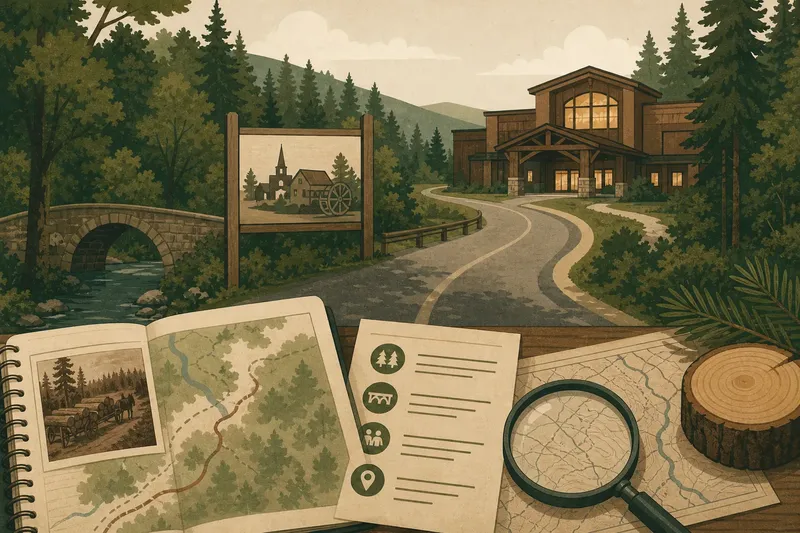
A visitor follows a tree-lined road towards a casino, passing an old bridge and a village sign before the entrance comes into view. The forest history behind a woodland casino destination can make that arrival more meaningful, if the story connects the property to the land and people around it.
That connection takes more than timber-coloured interiors or a view of trees. It depends on specific details: how the road developed, what work shaped the area, and how nearby residents use the landscape today.
Start with the route into the destination
The journey to a casino is part of its story. A wooded drive, a shuttle from a nearby town or a path from a hotel can mark the shift from ordinary travel to a place set apart for dining, entertainment and gaming.
To give that transition local meaning, identify what the route actually follows. It may cross former working land, link settlements or pass a site connected with timber transport. Those details should be checked against reliable local records rather than inferred from the presence of trees.
Imagine a fictional resort whose entrance road crosses land once used for timber hauling. Its team consults a local archive, confirms the route’s past use, then adds a short note to the visitor map distinguishing the old haul road from the modern entrance. The result is a clearer account of how the site fits its surroundings, without suggesting that the casino created the route or owns the area’s history.
Explain timber heritage without turning it into decoration
Timber can be a material, a trade and part of a community’s memory. A wooden façade may evoke a forest, but it does not by itself show how local forestry shaped work, transport or settlement.
A grounded account names what is known: the kinds of forest work recorded in the area, the places connected to it and the changes that followed. If the evidence is incomplete, say so plainly. A caption beside a historic map or a short audio stop can introduce the subject without making the whole visit feel like a history lesson.
Careful wording also avoids reducing forestry to a romantic image. Timber work changed landscapes and livelihoods; a useful story can recognise both the skill involved and the consequences of land use.
Connect the property to its wider landscape
A casino may be the main reason for a visit, yet its setting includes more than the boundary of the property. Nearby villages, public paths, rivers and cultural places can help visitors understand the region, provided the information is accurate and access is genuinely available.
Specific names are more useful than a broad claim such as “surrounded by nature”. If a public trail is open, describe where it begins and how it relates to the property. If access is restricted, do not present it as part of a guest experience.
This distinction gives writers and visitors a practical choice: describe the casino as a self-contained stop, or as one part of a broader regional visit. The right description depends on real links, not on a desire to make the destination sound more remote or extensive.
Include the people who live with the landscape
Forest roads and woodland edges are not only scenery for visitors. They may be part of daily commutes, local businesses, land management and family memories. A destination story that acknowledges these uses feels more rooted than one that presents the woods as a private backdrop.
Local place names and community accounts can help, but they should be included with care and accurate attribution. A brief explanation of how residents use a nearby route may be more informative than a sweeping claim about a timeless forest culture.
Think of the landscape as a shared front porch: it belongs in the story of arrival, but it is not simply a private entrance. That everyday comparison helps keep the visitor’s experience in view without erasing the neighbours.
How can a woodland casino story stay specific?
Does a casino need to sit deep in a forest?
No. A property might relate to woodland through its approach, nearby landscape or local history. The description should make clear which connection is real rather than implying wilderness where there is none.
What details make forest history credible?
Look for named locations, documented land uses and a clear distinction between known facts and interpretation. If a source cannot support a claim about a road or timber trade, leave that claim out or explain what remains uncertain.
How can timber heritage be presented with balance?
Describe the work, materials and community changes involved, while recognising that forestry also altered the land. This gives visitors context without turning extraction into a nostalgic theme.
When should a casino mention nearby public places?
Mention a trail, village or cultural site when its location, access and relevance can be described accurately. If visitors cannot reach it or the connection is unclear, keep the destination account focused on the property and its immediate setting.
Use a simple editorial check before telling the story
Before publishing a destination description, compare each claim with a map, local record or direct confirmation from an appropriate source. Then decide whether the wording describes a documented connection, a present-day visitor option or simply an impression.
- Check whether the entrance road has a documented earlier use; if records confirm it, describe that history carefully, and if they do not, call it a modern access road instead.
- Check whether a timber-work claim names a supported place or activity; if it does, include the specific context, and if it does not, remove the claim rather than making it sound local.
- Check whether a nearby trail is public and accessible; if access is confirmed, explain where it is, and if access is uncertain or restricted, do not advertise it as a guest outing.
- Check whether a map caption distinguishes historical routes from current ones; if it does, keep the distinction, and if it does not, revise the caption to prevent confusion.
- Check whether community accounts are accurately attributed; if the source and permission are clear, use the account with context, and if either is missing, seek confirmation or leave it out.
- Check whether the description presents the forest as shared land or as a private casino feature; if it acknowledges local use, retain that framing, and if it implies ownership without evidence, rewrite it.
For example, imagine a fictional editor working with three starting inputs: a visitor map, an archive note about an old timber route and an unconfirmed claim that a public path begins beside the casino. The editor checks the map against the archive, labels the historic route separately from the present entrance, then asks the relevant local authority about the path. If access is confirmed, the description names the path and its public status; if not, it omits the outing claim and keeps the account to the verified route and timber history.
A woodland casino destination becomes easier to understand when its forest history rests on clear local connections rather than mood alone. The useful final check is small: make sure a visitor can tell what is documented, what is accessible and what belongs to the wider community, then let those distinctions guide the story.